
Eating in Barcelona’s Gothic Quarter
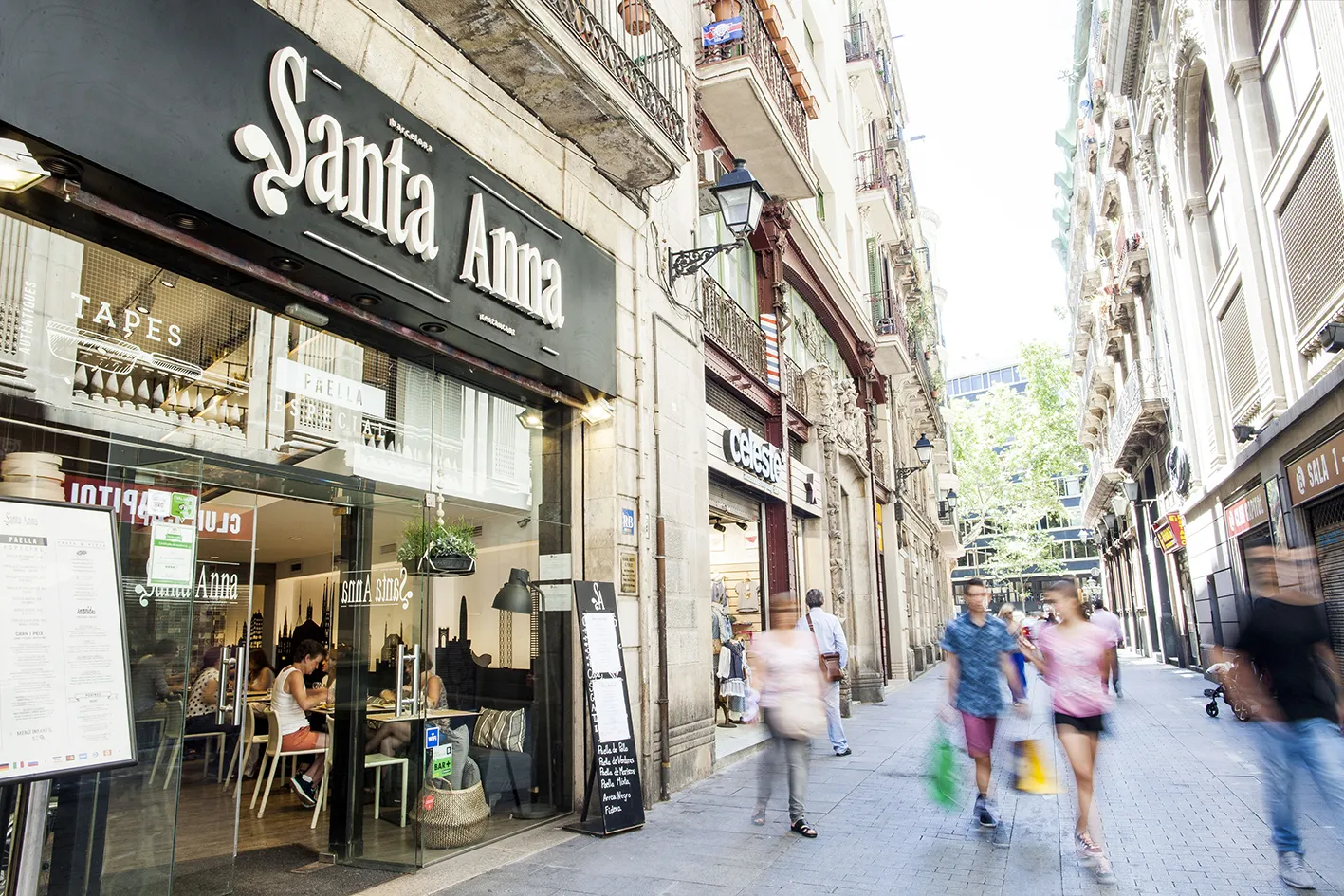
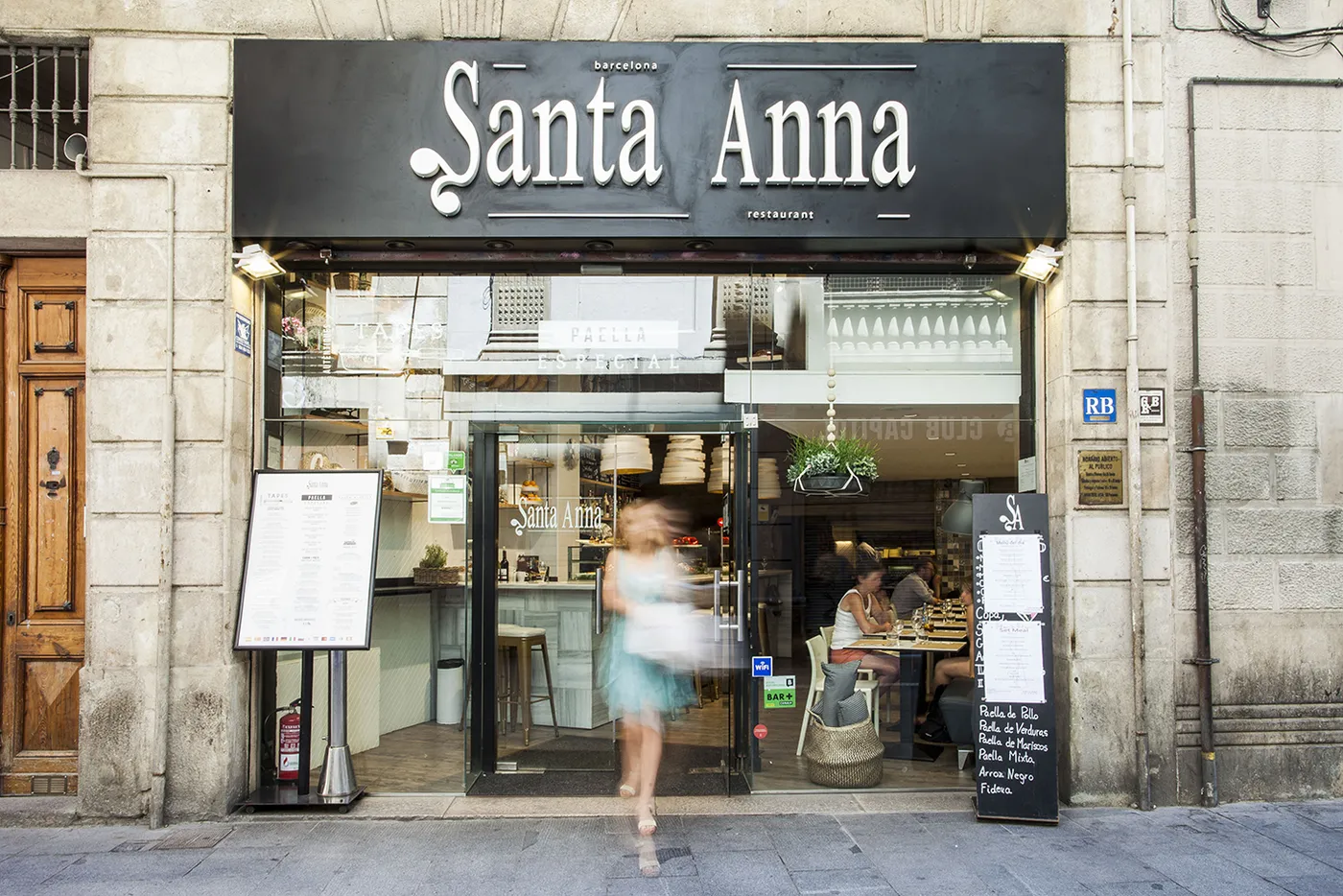
Same family, same street, since 1929. Carrer de Santa Anna 8, thirty metres from La Rambla: tapas, six rice dishes on the menu and a set lunch at midday.
Carrer de Santa Anna 8
Sun to Thu 11:00 – 23:30 · Fri and Sat 11:00 – 00:00
Why eat in the Gothic Quarter?
People have eaten in the Gothic Quarter for a great deal longer than Barcelona has had tourists. This is where travellers entered the city: our street had a gate at either end, and they stopped here to eat before going further in. Tables have been laid here without a break since the eighteenth century.
It is also the most walked part of Barcelona, and both things are true at once: families who have kept the same house for generations, and places nobody ever goes back to. From the pavement they look the same.
We have been at number 8 since 1929, thirty metres from La Rambla, six minutes from Plaça Catalunya and nine from Barcelona Cathedral.
Tapas in the Gothic Quarter
Every restaurant in the quarter serves tapas. The lists look alike from one door to the next, and nothing on the front of a building tells you what is actually coming out of its kitchen.
The difference is on the plate. In some restaurants in Barcelona the bravas arrive lukewarm and the croquettes soft, which is the sign they were not cooked on the spot.
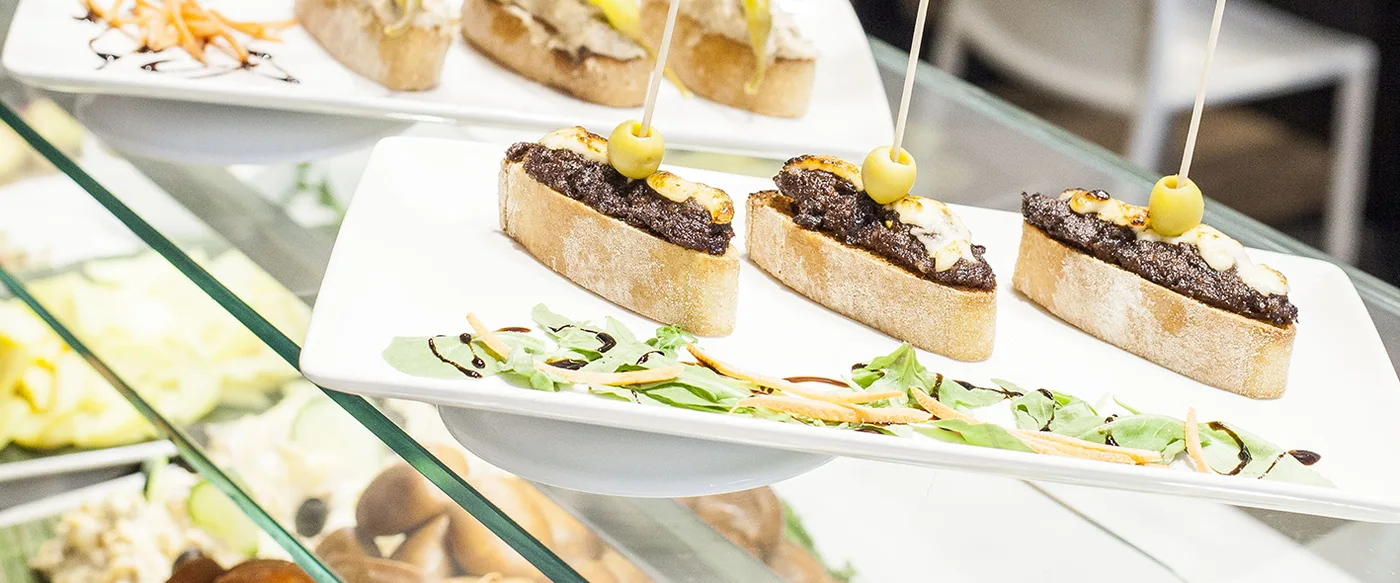
Here the montaditos are laid out along the counter and chosen by eye; everything else comes out of the kitchen. The bread with tomato arrives before the rest, the croquettes crisp, the patatas bravas under homemade tomato sauce and allioli. That is what puts ours among the best tapas near Plaça Catalunya.
Paella in the Gothic Quarter
It is on almost every menu in the quarter, and it is worth saying plainly: paella is not Catalan. It comes from Valencia.
We have it on ours like everyone else, but every one of ours is homemade, cooked here one pan at a time. Alongside it we serve real Catalan dishes such as black rice, black with squid ink, and the fideuà, which swaps paella’s rice for short noodles.
The stoves go on when the order reaches the kitchen, and it takes a good half hour. If you have ever been served a paella ten minutes after ordering it somewhere else in Barcelona, it had been cooked before you walked in.
Where to eat in the Gothic Quarter
The quarter is full of places to eat, and most people passing through get one try at picking well. Here is how we work, in enough detail that you can measure it against anywhere else in the quarter.
Every paella is homemade
It starts with the sofrito, the base of onion, pepper and confit garlic cooked down slowly in oil, and then the rice and the fish stock. Fifteen to twenty minutes from the order reaching the kitchen to the pan reaching your table. One that arrives in ten was cooked before you sat down.
A set lunch at midday
Served at midday to people who work nearby and will be back on Thursday, which is a harder room to cook for than a room of strangers. Feeding the same regulars all year is what keeps this an affordable restaurant in the Gothic Quarter rather than a terrace living off passing trade.
The same family since 1929
Founded by Josep Vila and run by his family ever since. Same street, same number. The dining room has been redone; nothing else has moved.
Long tables for groups
From ten people up, at a price per person, with four set menus between €22 and €43. You book a group table by telephone.
See the group menusLunch in the Gothic Quarter
A menú del día is not a tourist menu, and the difference is in who eats it. It lives on the same people coming back three times a week, which leaves very little room for a weak plate or a price that is out of line. Across Catalonia it averages €15.40.
The top of this street runs into Plaça Catalunya, where El Triangle holds 12,400 m² of offices over five floors.
The address is not an accident.
People have been arriving in Barcelona along this street for eight hundred years, and we have been feeding them since 1929.
The street ran from one gate to the other: the Santa Anna gate at the bottom, where La Rambla begins, and at the top the one called Portal de l’Àngel today. Whoever arrived stopped at the fountain, watered their animals and ate something before going on, which is still what the street is for.
- 1141 The Order of the Holy Sepulchre began building the church of Santa Anna on this street. The Gothic cloister behind it came three centuries later.
- 1356 The Santa Anna fountain went up beside the gate at the top, a trough for travellers and their animals on the way in. It is still there, on Portal de l’Àngel.
- 1929 The restaurant opened at number 8, and we are the same family serving you now.
Down the Portal de l’Àngel, the city council counts some eighty thousand people a day on foot.
Is the Gothic Quarter a tourist trap?
Parts of it are, and it would be dishonest to pretend otherwise. The quarter sees a great many people who will eat in it once and never come back, and a restaurant that never sees the same customer twice has little reason to cook carefully or price fairly.
You don’t need to know anything about cooking to tell the difference. Rice that arrives bright yellow never saw saffron. And anyone standing outside stopping people on the pavement is not filling the room on the strength of the food: that trade runs on commission, at four to seven euros a head for a taxi driver, and three to six hundred a month for a concierge.
The sign worth looking for is the opposite one: a room with people in it at two in the afternoon on a Tuesday, eating the set lunch, who work nearby and could have gone anywhere.
Near Barcelona Cathedral and Las Ramblas
La Rambla borders the Gothic Quarter rather than belonging to it, and the quarter begins immediately behind it. We are thirty metres from that corner. On foot from the door:
- Portal de l’Àngel 4 min
- Plaça Catalunya 6 min
- La Boqueria market 6 min
- Plaça del Pi 6 min
- Barcelona Cathedral 9 min
- Plaça Reial 10 min
- Santa Maria del Mar 15 min
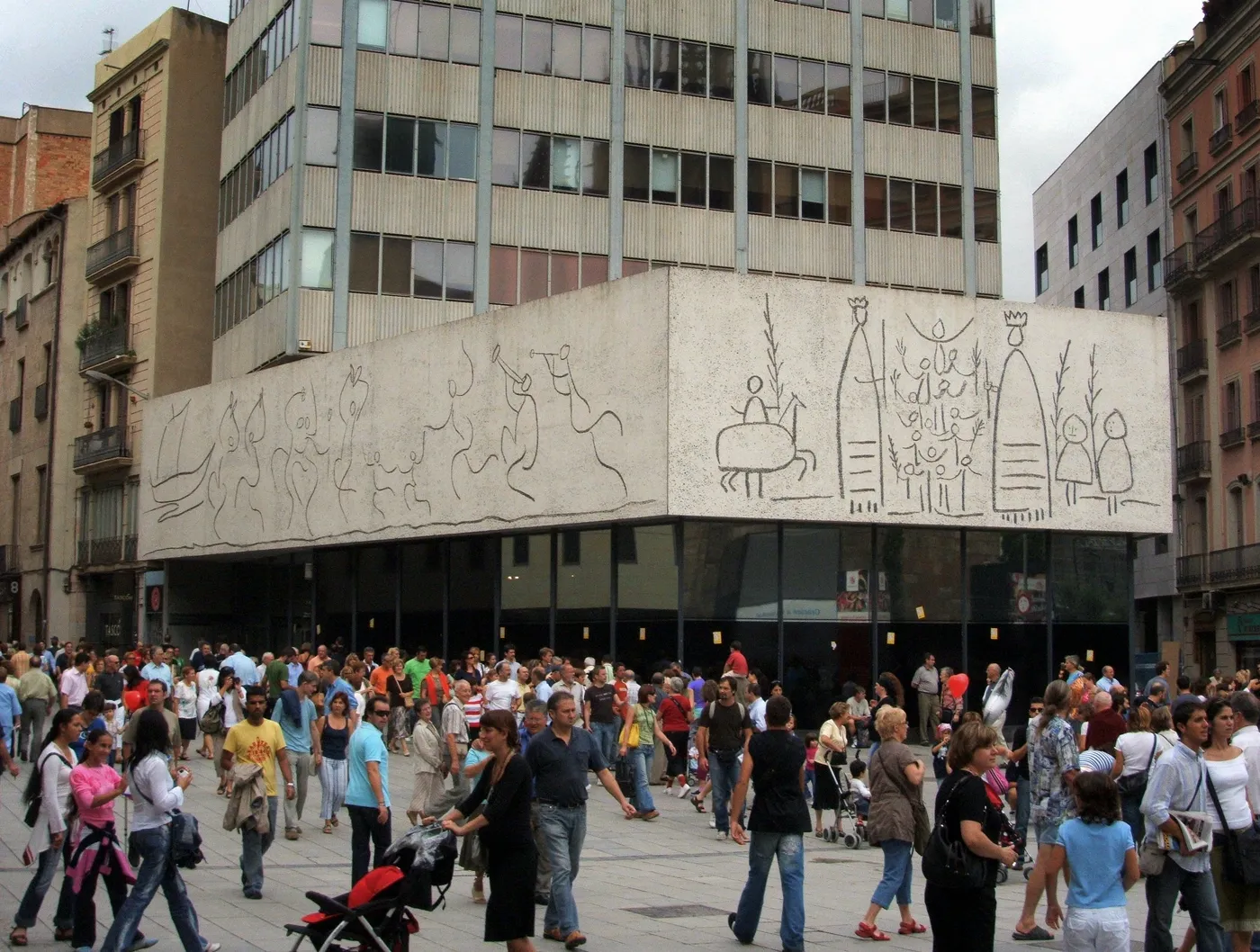
On the way up to the cathedral, in Plaça Nova, you pass a façade drawn by Picasso in 1962, with the Roman wall beside it, standing there since the third century. It is in the street, it is free, and almost nobody looks up.
How to find us
Metro Catalunya, lines 1 and 3. Come out onto the square, walk down Portal de l’Àngel, and Santa Anna is the first street on your right, six minutes from the square.
Carrer de Santa Anna 8
08002 Barcelona
- Sun to Thu 11:00 – 23:30
- Fri and Sat 11:00 – 00:00
- Is La Rambla part of the Gothic Quarter?
- No. It runs along the western edge of it, and the quarter begins immediately behind. We are thirty metres from that corner, on the quarter side.
- What is the typical dish in Barcelona?
- Almost every meal starts with bread with tomato. After that, what genuinely belongs here is black rice, black with squid ink, the fideuà and crema catalana. Paella comes from Valencia.
- What is the difference between paella and fideuà?
- The same pan and the same cooking. The fideuà swaps the rice for short noodles, and takes just as long.
- Can you eat here as a group?
- From ten people up, at a price per person, with four set menus between €22 and €43. You book a group table by telephone.